 While I drink my coffee
Lo que nadie vio
What nobody saw
Tap any word to see its meaning and save it to your vocabulary. Select a few words to save a phrase. The “en” button after a paragraph shows its translation.
A la mañana siguiente, Tommy e Inés prueban el cambio pequeño. Los dos casos funcionan: la devolución con descuento sale bien y el importe ya no cambia de una pantalla a otra. —Me alegra que funcione —dice Inés. Por primera vez, lo dice sin ironía.
The next morning Tommy and Inés test the small change. Both cases work: the discounted refund comes out right and the amount no longer changes from one screen to the other. “I’m glad it works,” says Inés. For the first time, she says it without irony.
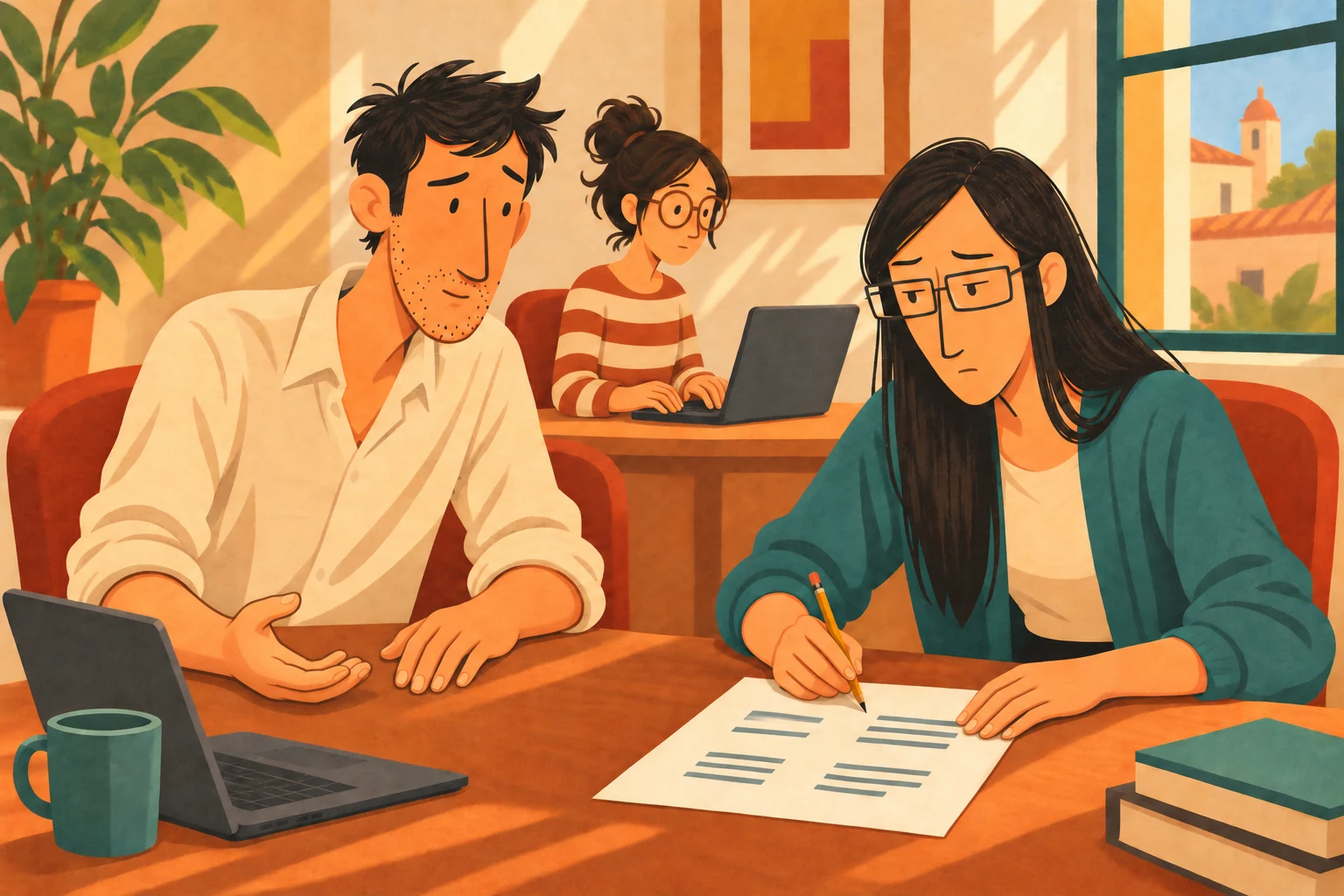
Pero Inés quiere comprobar una cosa más. Busca devoluciones antiguas en los datos reales. Tarda diez minutos en hablar. —Este no es nuevo. Desde agosto, algunos con descuento han recibido menos dinero del que debían. Poco: uno o dos euros. Pero son muchos clientes.
But Inés wants to check one more thing. She looks for old refunds in the real data. It takes her ten minutes to speak. “This bug isn’t new. Since August some customers with a discount have received less money than they should have. Not much: a euro or two. But it’s a lot of customers.”
Tommy mira la lista. Inés escribió ese cálculo hace dos años. —Lo arreglamos hoy y ya está —propone ella en voz baja—. No hace falta un drama. —Es importante que lo sepan —responde Tommy—. Es dinero de los clientes, no un detalle técnico.
Tommy looks at the list. Inés wrote that calculation two years ago. “We fix it today and that’s that,” she suggests quietly. “There’s no need for drama.” “It’s important that people know,” Tommy replies. “It’s customers’ money, not a technical detail.”
Llaman a Karina: los descuentos de agosto eran de su . —Me preocupa que los clientes piensen que lo hemos escondido —dice—. Prefiero que mi equipo les escriba, con el dinero ya devuelto.
They call Karina: the August discounts were part of her campaign. “I’m worried customers will think we hid it,” she says. “I’d rather my team wrote to them, with the money already refunded.”
Sasha propone algo práctico: un corto, sin culpables. Qué ha pasado, a cuántos clientes afecta, qué cambio lo corrige y qué van a hacer con el dinero. Lo escriben juntos en media hora. Antes de enviarlo, Inés lee el texto otra vez. Luego escribe su nombre al final. —Es normal que me cueste —dice—. Pero el cálculo era mío.
Sasha suggests something practical: a short report with no culprits. What happened, how many customers are affected, what change fixes it and what they will do about the money. They write it together in half an hour. Before sending it, Inés reads the text again. Then she writes her name at the end. “Of course it’s hard for me,” she says. “But the calculation was mine.”
Chapter exercises
Grammar in this chapter: me alegra que, es importante que + subjunctive; haya + participle
1. ¿Qué pasa con el cambio pequeño?
2. ¿Qué descubre Inés?
3. Es importante que lo ___.
4. ¿Qué hace Inés al final?
Write it yourself
Escribe el mensaje de Inés a su responsable: qué ha pasado y qué proponen. Usa es importante que y me preocupa que.
Write Inés’s message to her manager: what happened and what they propose. Use es importante que and me preocupa que.